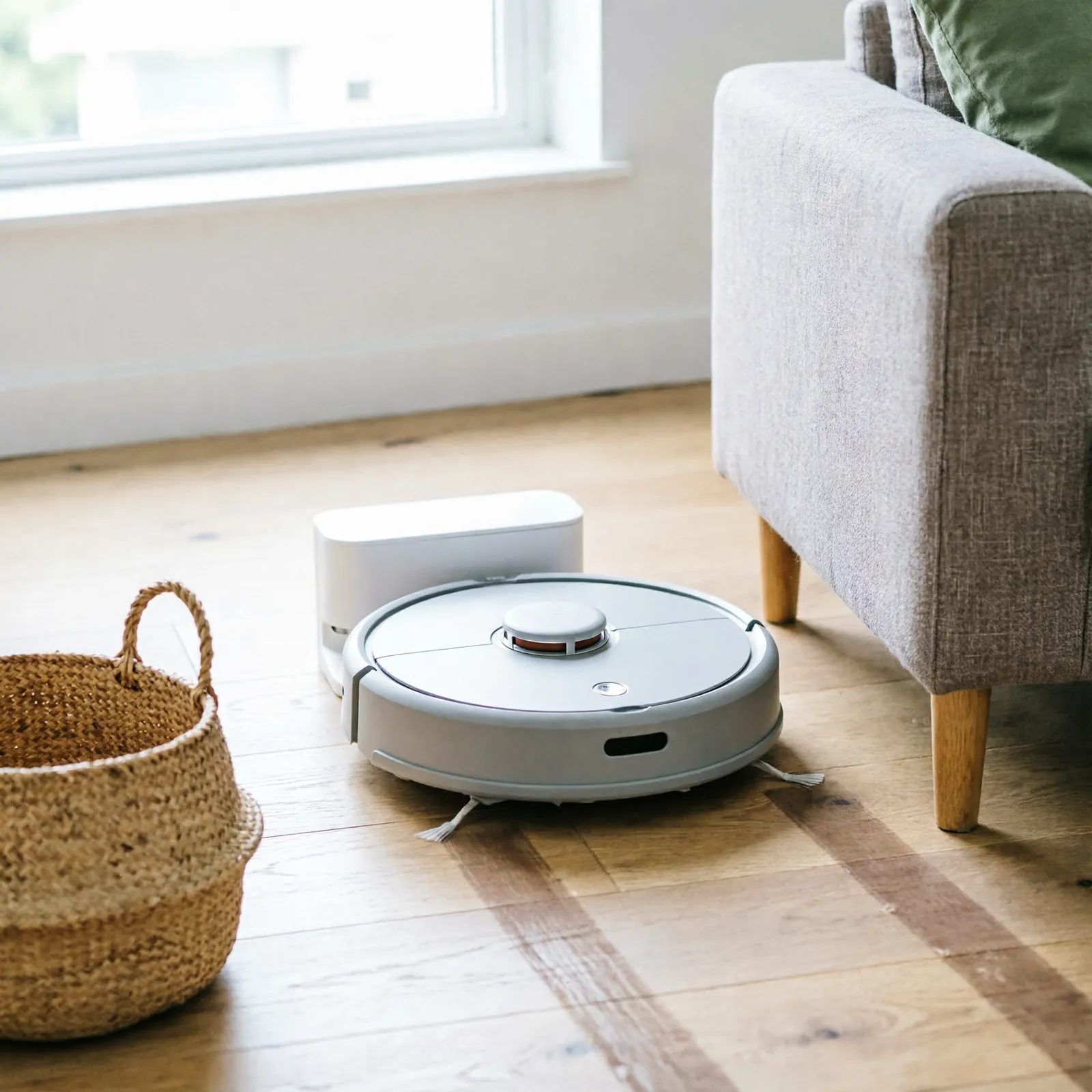
Overview
Strong rated suction, LiDAR mapping and a dock that empties the bin for you — the combination that turns a gadget into something you can stop thinking about.
We researched the Q7 Max+ Robot Vacuum with Auto-Empty Dock from Roborock against the criteria we use for this category: manufacturer specifications, patterns in verified owner reviews, independent testing published by others, and warranty and parts support. We do not test products in-house; what follows is our analysis, including the trade-offs that tend to show up only after the first few weeks of ownership.
Key features
LiDAR navigation
A spinning laser sensor builds a map of your home so the robot cleans in methodical rows rather than random patterns. LiDAR is the navigation type independent testing generally finds most reliable, and owners commonly report accurate room detection and dependable returns to the dock.
Auto-empty dock
The dock suctions the robot’s bin into a sealed bag after every run. Roborock’s guidance, and typical owner experience, is that the bag needs changing every several weeks instead of emptying a bin after every clean.
Vacuum and light mop
An attachable mop plate handles light surface grime on hard floors. It is a convenience feature, not a replacement for proper mopping.
Detailed app control
No-go zones, room-specific scheduling, multi-floor maps and suction adjustment per room. Setup is quick, and once schedules are set most owners rarely need to open it.
Pros & cons
What we like
- High rated suction for hard floor, low pile and pet hair
- LiDAR mapping with room-by-room cleaning
- Auto-empty dock means you rarely think about it
- Good app with no-go zones and per-room settings
- Designed to climb typical thresholds and transitions
What could be better
- Mopping is light surface cleaning only
- Dock bags are an ongoing consumable cost
- Loud on maximum suction
- Struggles with deep-pile rugs and thick carpet fringe, as most robots do
Who it’s for
Pet owners
Daily maintenance cleaning of hair and tracked-in grit is exactly what robot vacuums are good at, and this is where the auto-empty dock earns its keep.
Hard floor and low-pile homes
Hardwood, tile, laminate and short pile are its ideal conditions. Deep-pile carpet is where robot vacuums generally disappoint.
Households that value routine
Schedule it to run while you are out and the floor simply stays clean. The benefit compounds over months.
Not a substitute for deep cleaning
It maintains a clean floor; it does not replace an upright for stairs, upholstery and periodic deep cleans.
Performance & notes
Pickup on hard floor and carpet
A rated 4,200 Pa of suction is strong for a robot in this price band, and owner reviews consistently describe good pickup of crumbs, litter and pet hair on hard floors. On low pile, expect embedded grit to need repeated runs — which daily scheduling handles naturally. Deep-pile rugs are the clear limitation for this robot and for robot vacuums generally: suction through a small head cannot match a powered upright brush bar.
Navigation and reliability
LiDAR navigation is the main reason robots like this get stuck far less often than camera-less or gyroscope-guided models. Owners commonly report accurate first maps, methodical rows and reliable recharge-and-resume behaviour. The most frequent complaints are the universal ones: cables, socks and low furniture that traps the robot. Tidying the floor and setting no-go zones solves most of them.
Mopping
Expect the mop plate to handle light surface dust and footprints on hard floors. It drags a damp pad rather than scrubbing, and the pad needs rinsing regularly. Treat it as a bonus rather than a reason to buy.
Maintenance and running costs
Aside from dock bags, upkeep is a main brush, side brush and filter — all inexpensive and widely available from Roborock and third parties. Based on typical replacement intervals and current part prices, budget roughly $30–$50 a year in consumables for an average home. That is the honest total cost of ownership beyond the purchase price.
Specifications
Cleaning
- Suction
- Up to 4,200 Pa (rated)
- Runtime
- Up to 180 minutes (claimed, lowest power)
- Bin capacity
- 470 ml robot, 2.5 L dock bag
- Navigation
- LiDAR with multi-floor mapping
Physical
- Dimensions
- 13.8 × 13.8 × 3.8 inches (listed)
- Noise
- Loud at max suction; quieter modes available
- Voice control
- Alexa, Google Home, Siri Shortcuts
- Warranty
- 1 year
The verdict
Our verdict
The robot vacuum we would recommend for most homes
The appeal of a robot vacuum is not that it cleans better than you do — it does not. It is that the floor stays clean without you thinking about it. On specifications and owner feedback, the Q7 Max+ gets that formula right: LiDAR mapping, strong rated suction for the surfaces most homes have, and a dock that removes the one daily annoyance that makes people abandon robot vacuums. It is one of the easiest ways to make a noticeable difference to how a home feels.
Overall rating
4.5/5
Opens Amazon in a new tab. We may earn a commission — it never affects our recommendations.
SnagaReview is reader-supported. When you buy through links on our site we may earn an affiliate commission at no extra cost to you. Read our full affiliate disclosure.
Frequently asked questions
Do robot vacuums work on carpet?
Well on low and medium pile, poorly on deep pile. They are best thought of as maintenance cleaning for hard floors and short pile, not as a replacement for an upright.
How often do I need to empty the dock?
Typically every several weeks, sooner in a home with pets and less often without. The dock bag holds several full robot bins worth of debris.
Will it fall down stairs?
It is fitted with cliff sensors designed to detect drop-offs, and falls are rarely reported by owners. You still need to tidy cables and small objects off the floor before a run.
Is the mopping attachment worth using?
For light dust and footprints on hard floors, yes. It will not remove dried spills or grout dirt, and you should not choose a robot vacuum on mopping strength alone.