The short version
Almost every stand mixer does the same basic job. The differences that determine whether you are still happy in five years are mechanical: how the head attaches, how the motor drives the beater, and whether the manufacturer still sells parts a decade later.
Ignore wattage as a headline number. A well-engineered 300-watt direct-drive mixer outperforms a 1,000-watt motor driving plastic gears, and it does so more quietly and for longer.
Tilt-head vs bowl-lift
Tilt-head
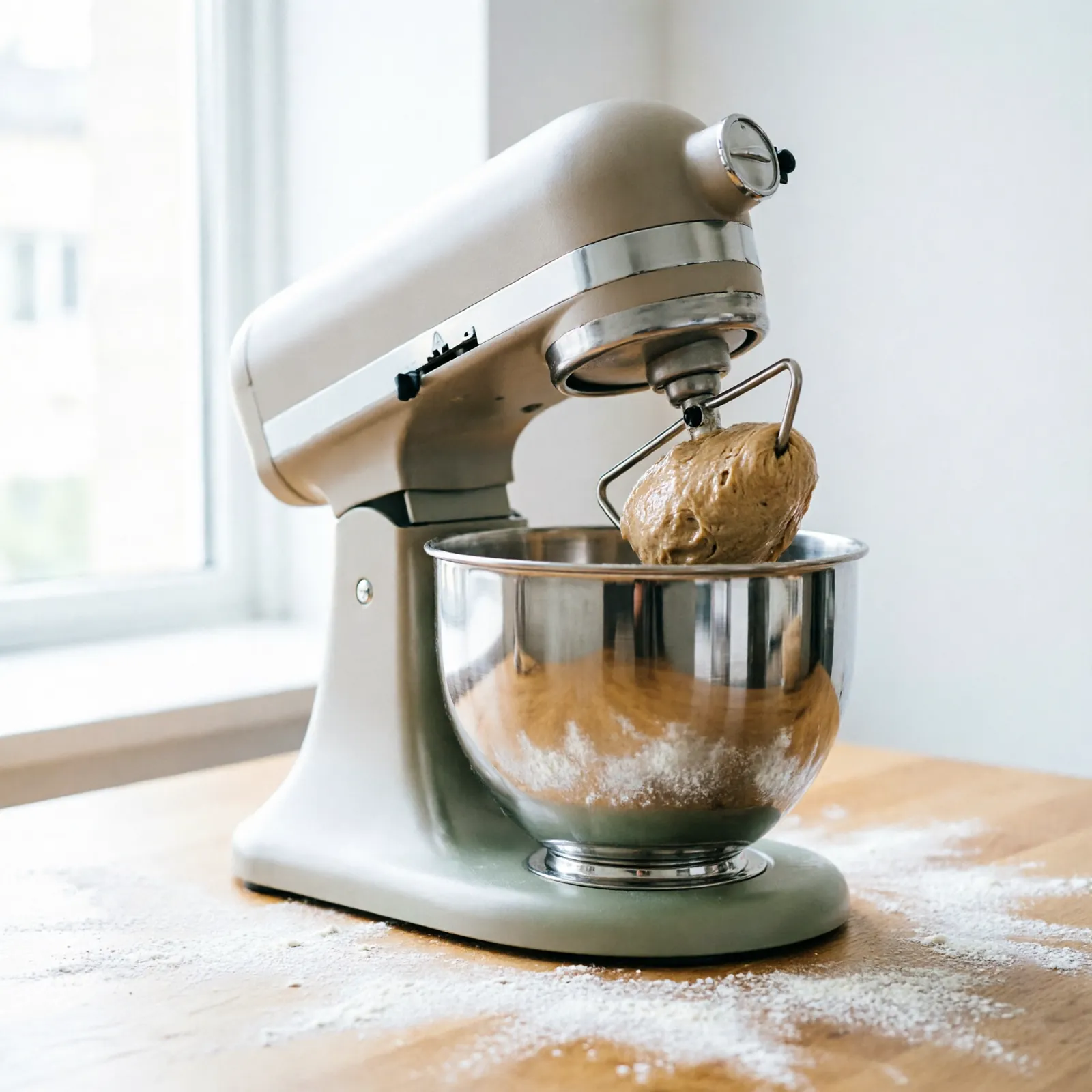
The head tilts back so you can add ingredients and swap attachments freely. It is lighter, easier to store and faster to use for everyday baking. For most home bakers this is the right answer.
Bowl-lift
The bowl rises on a lever while the head stays fixed. It is steadier under very heavy loads and available in larger capacities, but it is heavier, taller and more awkward to scrape down.
Choose tilt-head unless you regularly mix double or triple batches of stiff bread dough. That single use case is where bowl-lift earns its trade-offs.
Bowl capacity by household
Swipe the table sideways to compare every specification.
| Feature | Recommended 4.5–5 qt Most households | 6 qt Regular bakers | 7 qt+ Volume baking |
|---|---|---|---|
| Household size | 1–4 people | 4–6 people | 6+ or selling |
| Bread dough | 2 loaves | 3–4 loaves | 5+ loaves |
| Cake batches | 1–2 standard | 2–3 standard | 3+ standard |
| Counter space | Manageable | Significant | Large |
| Weight | 22–25 lb | 25–30 lb | 30 lb+ |
| Typical price | $280–$450 | $400–$600 | $500–$900 |
| Buy |
4.5–5 qt
Most households
- Household size
- 1–4 people
- Bread dough
- 2 loaves
- Cake batches
- 1–2 standard
- Counter space
- Manageable
- Weight
- 22–25 lb
- Typical price
- $280–$450
6 qt
Regular bakers
- Household size
- 4–6 people
- Bread dough
- 3–4 loaves
- Cake batches
- 2–3 standard
- Counter space
- Significant
- Weight
- 25–30 lb
- Typical price
- $400–$600
7 qt+
Volume baking
- Household size
- 6+ or selling
- Bread dough
- 5+ loaves
- Cake batches
- 3+ standard
- Counter space
- Large
- Weight
- 30 lb+
- Typical price
- $500–$900
SnagaReview is reader-supported. When you buy through links on our site we may earn an affiliate commission at no extra cost to you. Read our full affiliate disclosure.
Bowl capacity
Manufacturers quote liquid capacity, which is not the useful number. What matters is flour capacity: how much dough the mixer can knead without the motor straining or the bowl overflowing.
As a practical guide, a 5-quart mixer handles two loaves of bread comfortably. That covers most households. Sizing up costs more, takes more space and gives you a bowl that is harder to scrape down for small batches — which is what you will actually make most days.
Motor power and construction
Two things matter here, and neither is the wattage figure on the box.
Direct drive versus gears. Direct-drive systems transfer power efficiently and quietly. Cheaper mixers use plastic gear trains that are the usual failure point under load. Ask what happens when the mixer stalls — a sacrificial nylon gear is a deliberate design choice that protects the motor, but it means a repair rather than a replacement.
All-metal construction. A heavy die-cast body absorbs vibration and stays put. It also costs more and weighs more. Both are acceptable trade-offs; a mixer that walks across the worktop is not.
Attachments and the ecosystem
The front power hub is the most marketed and least used feature on most mixers. A few attachments earn their place: a pasta roller and a meat grinder are genuinely good and genuinely used. Spiralizers, juicers and ice cream makers usually end up in a cupboard.
Buy one attachment at a time rather than a bundle. And check parts availability before committing — a mixer whose bowls and beaters are still sold after fifteen years is worth more than one with a longer feature list.
Buying checklist
Before you buy, confirm these six things
- Tilt-head unless you bake heavy dough in large batches regularly
- A 4.5 to 5-quart bowl unless you routinely bake for six or more
- All-metal construction and a direct-drive transmission
- Beaters, dough hook and whisk included — not sold separately
- Replacement bowls and beaters still available for older models
- You have measured the cupboard it will live in, including height under shelves
Common questions
Is a stand mixer worth it if I only bake occasionally?
Probably not. If you bake a few times a year, a good hand mixer covers most tasks at a fraction of the cost and space. Stand mixers earn their keep for people who bake weekly or make bread.
How long should a stand mixer last?
A quality machine should last twenty to thirty years with basic care. Motors rarely fail first — gears, cords and bowls are the usual maintenance items.
Do I need a bowl-lift for bread dough?
Only for large or very stiff batches. Two loaves of standard dough is well within the capability of a tilt-head mixer, which is what most people bake.
Which attachments are actually worth buying?
The pasta roller set and the meat grinder are the two that get used regularly. Everything else depends on a specific hobby — buy it when you need it, not in advance.
SnagaReview is reader-supported. When you buy through links on our site we may earn an affiliate commission at no extra cost to you. Read our full affiliate disclosure.